
Contractor Marketing Blog
How Asheville Contractors Get More Jobs From Customers They've Already Won
Published 2026-04-30 · 8 min read
WNC contractors are sitting on a goldmine — past customers. Here's a 3-message reactivation sequence that books more jobs without chasing new leads.
Key Takeaways
- Past customers convert at 3–5x the rate of cold leads.
- Most WNC contractors go silent the moment an invoice clears — that's the gap.
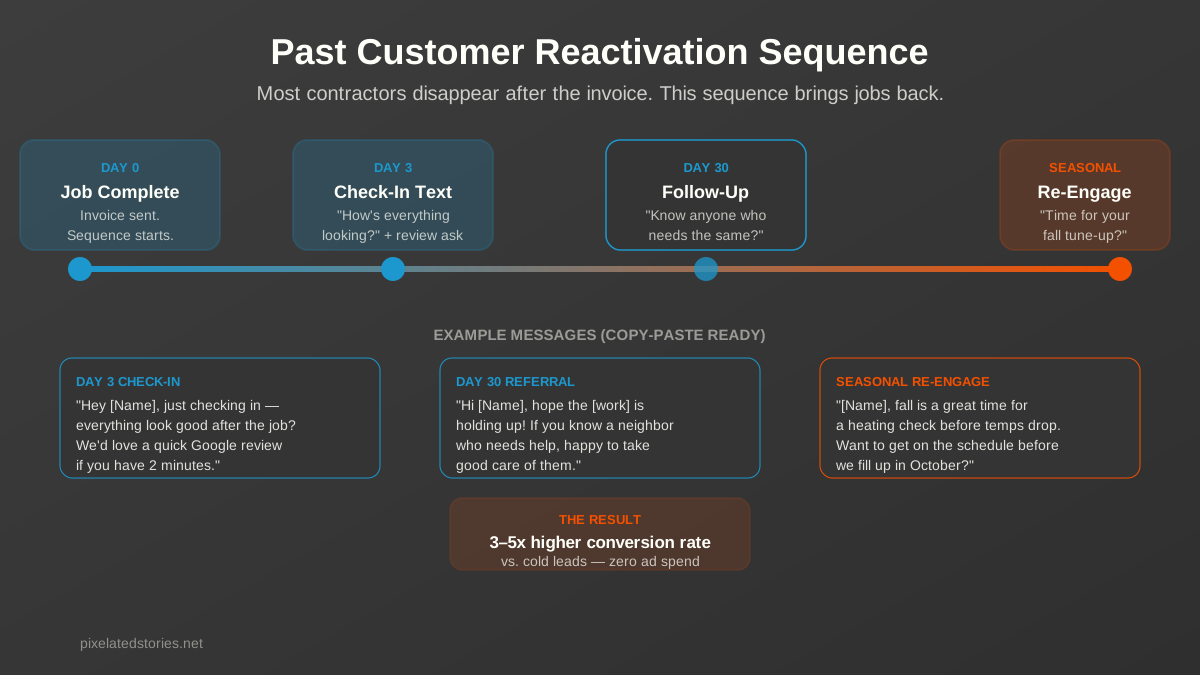
- Three timed messages — day 3, day 30, and seasonal — bring customers back.
- Automation runs the sequence without you having to remember it.
Most contractors in WNC are focused on one thing: getting the next new lead. More Google clicks, more form fills, more calls. That is not a bad goal. But it ignores something sitting right in front of them.
You have already done the hard part with your past customers. You showed up. You did the work. They paid. That relationship is worth something — and most contractors walk away from it the moment the invoice clears.
The Invoice-and-Disappear Problem
Here is what usually happens after a job closes. You invoice, the customer pays, and that is the last time they hear from you. No check-in. No seasonal reminder. Nothing.
Then six months later that same customer needs another job and they Google it fresh. They may not even remember your name. They find whoever ranks well that day, get two or three quotes, and you never get the call.
You did not lose that job because your work was bad. You lost it because you went quiet.
This happens across trades — HVAC guys in Asheville who serviced a unit in May and never reached back out before fall. Plumbers in Hendersonville who fixed a leak and let a solid customer sit untouched for two years. Roofers in Waynesville who did a full replacement and never once asked for a referral or checked in after a storm.
The customer did not leave. You just never gave them a reason to come back.
Why Past Customers Convert Higher Than Cold Leads
A cold lead found you on Google. They have never met you. They are probably getting three quotes and going with whoever seems legit enough at the right price. You have to earn that from scratch.
A past customer already trusts you. They know how you communicate. They know you showed up when you said you would. When you contact them again, you are not a stranger — you are the person who already solved their problem once.
In marketing terms, past customers convert at three to five times the rate of cold leads. The cost to reach them is a fraction of what you spend on ads. And because the trust is already there, the sales conversation is shorter.
Most home service businesses sit on hundreds of past customers and treat that list like it does not exist.
If you are spending money to generate new leads before you have worked your existing customer base, you are leaving the easiest revenue on the table.
The 3-Message Reactivation Sequence
You do not need a complicated campaign. Three messages — timed right — will move the needle.
Message 1: The Day-3 Check-In
Send this three days after the job is complete. Most customers are still thinking about what you did. The work is fresh. This is the highest-leverage moment to ask for a review and leave the door open for future work.
Example (text or email):
Hey [First Name], it's [Your Name] from [Business]. Just checking in to make sure everything looks good after the work we did earlier this week. If you have 60 seconds, a Google review would mean a lot to us — [link]. And if anything comes up down the road, we're always here.Short. Human. No pressure. This message does three things: confirms quality, generates a review, and plants the seed for the next job.
Message 2: The 30-Day Follow-Up
At 30 days, the job memory is fading but the customer still knows who you are. This message keeps you top of mind before they have a chance to forget.
Example:
Hey [First Name], just wanted to reach out and make sure everything is still holding up from the work we did last month. No action needed — just want to make sure you're happy. If you ever have questions or need anything else, you know where to find us.This one is purely relationship. No ask. The point is to be the contractor who actually checks in after the job — because almost no one does that.
Message 3: The Seasonal Check-In
This one goes out when your trade and the calendar line up. It is the message that books jobs.
Example (HVAC, spring):
Hey [First Name], spring tune-up season is here and our schedule is starting to fill up. As a past customer, I wanted to reach out first before we open up the calendar. Want me to pencil you in? Just reply here or call us at [number].The seasonal angle works because it is relevant and timely. The past customer framing works because it signals priority — you are reaching them first, before the general public.
Seasonal Timing by Trade
Different trades have natural seasonal openings. If you send the right message at the right time, the job is practically already sold.
HVAC: Spring AC tune-up (March/April) and fall heating check (September/October). WNC weather means both seasons hit hard. A tune-up reminder to a customer you serviced two years ago will book.
Plumbing: Fall is the natural window for winterization reminders — frozen pipes are a real concern in the mountains around Brevard, Black Mountain, and the higher elevations. Spring is the time for water heater checks and irrigation work.
Roofing: Post-storm follow-up is gold. After a heavy storm moves through WNC, a message to past customers offering a free inspection check is one of the highest-converting messages a roofer can send. The customer is already worried. You are solving the problem before they even had to ask.
Painting: Late winter or early spring is when homeowners start thinking about exterior work. A message to past interior customers asking if they have been thinking about getting the outside done converts well.
Landscaping and Lawn Care: Spring startup and fall cleanup are the obvious moments. A message in February to customers from last year — before they have signed with anyone else — is all it takes.
How Automation Handles It So You Never Forget
If you are relying on yourself to remember to send these messages, they will not go out. You are running a job, dealing with a supplier issue, and answering calls. The follow-up is the first thing that gets skipped.
Automated follow-up changes that. Once a job is marked complete in your system, the sequence triggers. Message 1 goes out on day 3. Message 2 goes out at 30 days. The seasonal messages go out to the right segment at the right time of year, automatically.
The follow-up automation behind that same system is what runs the reactivation sequences. You set it up once. It runs in the background. Your past customers hear from you at the right time, and some of them book.
For a contractor doing $400,000 a year, pulling even 5% of past customers back for a second job or referral is a meaningful number. That is not a stretch — it is what happens when you stop going quiet after the invoice.
WNC Contractors Are Sitting on Revenue They Have Already Earned
If you have been in business for more than two years in the Asheville area, you have a list. Customers in Fletcher, Weaverville, Arden, Mills River, Marshall — people who paid you money and had a good experience.
Most of them would hire you again. They just do not think about you because you have not given them a reason to.
A three-message sequence costs almost nothing to run. The jobs it books are higher-margin because you are skipping the cold lead cost entirely. And because trust is already there, fewer of those calls end in price shopping.
The contractors winning in WNC right now are not just getting new leads. They are mining what they already have.
Frequently Asked Questions
How long should I wait before reaching out to a past customer?
Do not wait. Send the day-3 check-in while the job is still fresh in their mind. That is your best window for a review request and for leaving the door open on future work. After that, the 30-day follow-up and seasonal messages handle the longer-term relationship. The most common mistake contractors make is thinking they need to wait for a good reason to reach out — the check-in itself is the reason.
What if I don't have email addresses for my past customers — just phone numbers?
That is fine. The same 3-message sequence works over text. Text actually tends to get opened faster than email for local service businesses. If you have a mix, run both. The goal is just to show up in their phone before someone else does.
Won't customers find it annoying if I keep following up?
Not if the messages are spaced right and feel human. A check-in three days after a job, one follow-up at 30 days, and one seasonal message per year is not aggressive — it is attentive. Most past customers will appreciate hearing from you. The ones who don't want contact can opt out. You are not running a spam campaign; you are staying in touch with people who already paid you to solve a problem.
How do I set up the seasonal sequences if my customer list is spread across years?
Start by exporting your job records and sorting by trade or job type. Group customers by the service they had done, then load them into a simple CRM or follow-up tool. Once they are in a segment, you can schedule the seasonal message to go out to that group each year at the right time. If you are using SUFU, the segmentation and scheduling are built in.
What kind of results should I expect from reactivating past customers?
Results vary by trade and how long it has been since you last contacted the list. In general, a first-run reactivation to a cold list of past customers will see a 10–20% response rate if the message is personal and timely. Even a 5% booking rate on a list of 200 past customers is 10 jobs without spending a dollar on ads. Most contractors are surprised by how quickly the first few jobs come back in once they actually send the message.

About the author: Jason De Los Santos
Jason is the founder of Pixelated Stories in Asheville, NC. He helps home service businesses tighten up websites, follow-up, and local visibility so more inbound calls turn into booked jobs.
Ready to put your customer list to work?
SUFU handles the full reactivation system — day-3 check-ins, 30-day follow-ups, and seasonal campaigns that go out automatically based on trade and timing. You do the work. The system handles the follow-up.